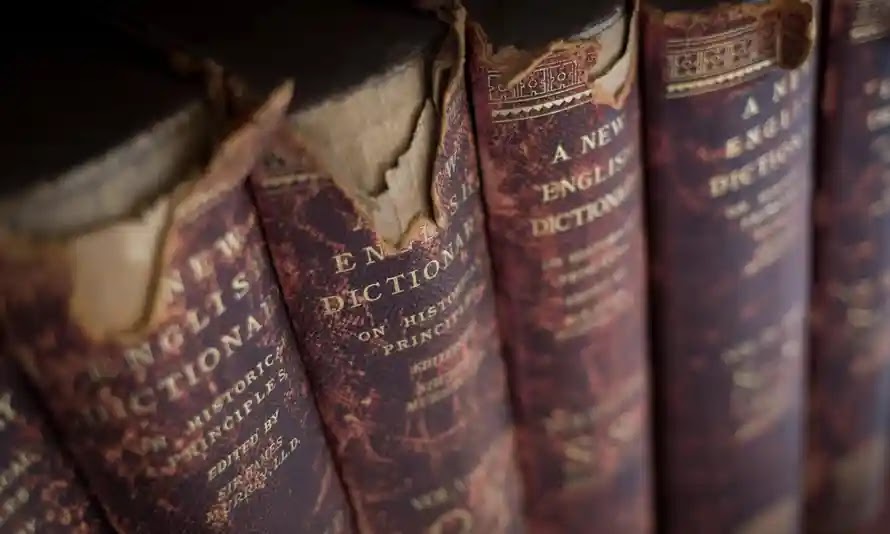
Dizionari: Victorian attempts to veil the meanings of crude ancient Greek words are
set to be brushed away by a new dictionary 23 years in the making. It
is the first to take a fresh look at the language in almost 200 years
and promises to “spare no blushes” for today’s classics students. The completed Cambridge Greek Lexicon, which is
being published by Cambridge University Press, runs to two volumes and
features around 37,000 Greek words, drawn from 90 authors and set out
across 1,500 pages. Alison Flood, The Guardian
Rassegna della stampa culturale americana e inglese. Segnalazioni di novità in libreria, articoli, interviste, dibattiti, idee e pettegolezzi.
30.5.21
Branching out
23.5.21
Guardare il lato positivo
L'università, nonostante la dad ecc. "But for many it has also been a time of self-discovery. Some applied themselves to academics in a way they never would have if offered the familiar buffet of campus amusements. Some bonded with a tight group of friends. Many, like Ms. Alvarado, found that for the first time in their lives, they had been liberated from their carefully planned lives and their focus on getting the approval of others". Anemona Hartocollis, NYT
Ancora un romanzo di Le Carrè: Finished before his death in December, le Carré gave his blessing to
publish the novel, which follows a bookseller who becomes embroiled in a
spy leak. Alison Flood, The Guardian
16.5.21
Una preghiera di Isaac Singer
The prayer below was composed by Polish-born Jewish-American author Isaac Bashevis Singer (ca. 1903-1991), whose published work includes numerous volumes of fiction, essays, memoir, and stories for children. It was handwritten on the back of a rent receipt made out to Singer by Riesner & Gottlieb, which shows he lived on 410 Central Park West, Apartment 12F, and that he paid $73.50 for March 1952. Tablet
Oh yes! The best books about sex. Kate Lister, The Guardian
9.5.21
What we got wrong
New York
I walked to Central Park. It had suddenly become warm and I was so jet lagged I thought I might faint. I found a place near the entrance to the park under a tree and collapsed on to the grass. Lying on my back, looking up at the big American sky between the leaves, I saw something hanging from the branches. It was a key. A key on a red ribbon that someone had hung on a branch and forgotten to take with them. I wondered if they had deliberately left it behind because they were never going to return to wherever the key belonged. Or perhaps they wanted to close a door on a chapter of their life and leaving the key behind was a gesture of this desire. There is always something secret and mysterious about keys. They are the instrument to enter and exit, open and close, lock and unlock various desirable and undesirable domains. Deborah Levy sulle case che ha sognato e sogna, sempre sul Guardian
Come parlare di cose difficili, tipo la morte, i soldi e il sesso: ce lo spiega Anna Sale in questo podcast del New York Times
2.5.21
Academic Freedom
In the 21st century, however, academic freedom’s most determined adversaries are inside rather than outside academia. A growing army on college campuses would like to restrict the scope of intellectual debate by subjecting academic inquiry to political litmus tests. Over the 20th century, American universities’ students and faculty pushed to make them havens for heretics, dissenters, iconoclasts, and nonconformists. In the wake of their success, many scholars now demand that campuses adhere to their own orthodoxies. Until recently I would have said that many students and faculty want the range of intellectual debate on a college campus to be narrower than the offerings in the New York Times’s op-ed pages. But now, of course, the college graduates hired by the Times are scrubbing its op-ed pages of heresies as well. Keith E. Whittingtoh, Claremont Review of Books
Finalmente cominciano a levarsi voci contro la "cancel culture" nel mondo accademico americano.
Anche molto interessante l'articolo di Mattia Ferraresi sulla campagna giornalistica contro Astra Zeneca: On March 12, 2021, La Repubblica, Italy’s most widely circulated and trusted newspaper, placed a chilling headline on its front page: “AstraZeneca, Fear across Europe.” [...]
The scare was amplified by the media, and La Repubblica’s headline stood out. Its language suggested to readers how they should feel, instead of describing the facts upon which readers should base their feelings. NiemanReports
25.4.21
Is Facebook Buying Off The New York Times?
And Facebook and Google money is, admittedly, all over journalism already. Virtually every major media nonprofit receives direct or indirect funding from Silicon Valley, including this one. When the Monthly gets grants from do-good organizations like NewsMatch, some of the funds originate with Facebook. [...]
But these three points are beyond dispute. [...]
First, the deals are a serious breach of traditional ethics. [...]
Second, these deals help Facebook maintain the public appearance of legitimacy. [...]
Finally, these agreements undermine industry-wide efforts that would help the smaller, ethnic, and local news organizations that are most desperately in need of help. Dan Froomkin, Washington Monthly
Come altre volte, le notizie sul giornalismo le prendo dall'interessantissima newsletter del Post, Charlie.
Altre notizie della settimana:
The vital role of war, Linda Colley,The Gun, the Ship, and the Pen: Warfare, Constitutions and the Making of the Modern World (Profile), recensito da Miles Taylor, The Guardian
Sempre sul Guardian i finalisti del Booker Prize.
18.4.21
Dictionary of Lost Words
In 1901, a concerned member of the public wrote to the men compiling the first Oxford English Dictionary to let them know that there was a word missing. In 1857 the Unregistered Words Committee of the Philological Society of London had decided that Britain needed a successor to Samuel Johnson’s 1755 dictionary. It had taken 40 years for the first volume – the letters A and B – to be published, and now they had only gone and left out a word.
The word was “bondmaid”, and when Australian author Pip Williams learned of its exclusion, she knew she had the makings of a novel. The Dictionary of Lost Words tells the story of the OED’s compilation through the fictional Esme, daughter of one of the men working on it, and her interactions with characters based on the real men and women behind the book.
A bondmaid is a young woman bound to serve until her death. Helen Sullivan, The Guardian17.4.21
What does it mean to edit a cover?
Even in the visual field, there are not many editors. There are art directors, but that’s slightly different. Art directors often illustrate a topic that’s given to them—the editor decides whom or what to put on the cover, and then it’s a matter of illustrating that concept or taking a photo of a politician or celebrity. With New Yorker covers, we aren’t usually illustrating a story. Our cover is a work in and of itself.
11.4.21
Animal attraction et al.
No More Mozart? Classical Music V. Cancel Culture