25.4.21

Is Facebook Buying Off The New York Times?

Participating in Facebook News doesn’t appear to deliver many new readers to outlets; the feature is very difficult to find, and it is not integrated into individuals’ newsfeeds. What Facebook News does deliver—though to only a handful of high-profile news organizations of its choosing—is serious amounts of cash. The exact terms of these deals remain secret, because Facebook insisted on nondisclosure and the news organizations agreed. The Wall Street Journal reported that the agreements were worth as much as $3 million a year, and a Facebook spokesperson told me that number is “not too far off at all.” But in at least one instance, the numbers are evidently much larger. In an interview last month, former New York Times CEO Mark Thompson said the Times is getting “far, far more” than $3 million a year—“very much so.” [...]

And Facebook and Google money is, admittedly, all over journalism already. Virtually every major media nonprofit receives direct or indirect funding from Silicon Valley, including this one. When the Monthly gets grants from do-good organizations like NewsMatch, some of the funds originate with Facebook. [...]

But these three points are beyond dispute. [...]

First, the deals are a serious breach of traditional ethics. [...]

Second, these deals help Facebook maintain the public appearance of legitimacy. [...]

Finally, these agreements undermine industry-wide efforts that would help the smaller, ethnic, and local news organizations that are most desperately in need of help. Dan Froomkin, Washington Monthly

Come altre volte, le notizie sul giornalismo le prendo dall'interessantissima newsletter del Post, Charlie.

Altre notizie della settimana:

The vital role of war, Linda Colley,The Gun, the Ship, and the Pen: Warfare, Constitutions and the Making of the Modern World (Profile), recensito da Miles Taylor, The Guardian

Sempre sul Guardian i finalisti del Booker Prize. 


18.4.21

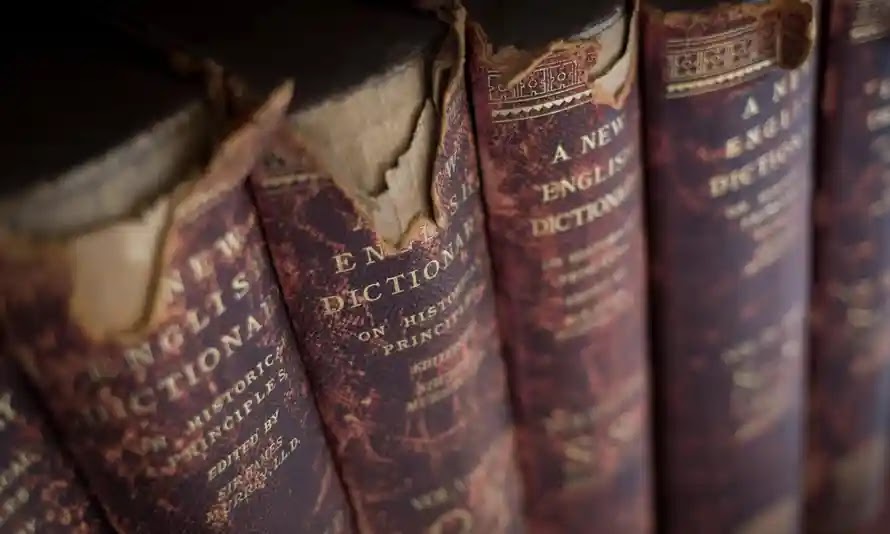
Dictionary of Lost Words

In 1901, a concerned member of the public wrote to the men compiling the first Oxford English Dictionary to let them know that there was a word missing. In 1857 the Unregistered Words Committee of the Philological Society of London had decided that Britain needed a successor to Samuel Johnson’s 1755 dictionary. It had taken 40 years for the first volume – the letters A and B – to be published, and now they had only gone and left out a word.

The word was “bondmaid”, and when Australian author Pip Williams learned of its exclusion, she knew she had the makings of a novel. The Dictionary of Lost Words tells the story of the OED’s compilation through the fictional Esme, daughter of one of the men working on it, and her interactions with characters based on the real men and women behind the book.

A bondmaid is a young woman bound to serve until her death. Helen Sullivan, The Guardian

17.4.21

What does it mean to edit a cover?

A questa domanda risponde l'art editor del New Yorker, Françoise Mouly, disegnatrice francese che ora vive a York (tra l'altro è la moglie di Art Spiegelman e tra l'altro è stata l'ideatrice della copertina tutta nera dopo l'11 settembre 2001).

Even in the visual field, there are not many editors. There are art directors, but that’s slightly different. Art directors often illustrate a topic that’s given to them—the editor decides whom or what to put on the cover, and then it’s a matter of illustrating that concept or taking a photo of a politician or celebrity. With New Yorker covers, we aren’t usually illustrating a story. Our cover is a work in and of itself.

 
My job is twofold: to generate and collect ideas, and then to work with the artists to make the ideas as clear and effective as possible. Each December, I send out a calendar for the coming year with the hallmark dates: holidays, news events, the Oscars. (Everyone always wants to do the Halloween cover.) The calendar starts a dialogue with dozens of artists ...

11.4.21

Animal attraction et al.

When Lou, the narrator of Marian Engel’s 1976 novel, Bear, meets a real bear, she finds that “its nose was more pointed than she expected – years of corruption by teddy bears, she supposed”. He is no cuddly toy, but she becomes surprisingly intimate with him. [...] She shits next to the bear in the mornings (that will make the bear like her, she’s told), and delights in her verdant surroundings. The bear fascinates her: “His bigness, or rather his ability to change the impression he gave of his size, excited her.” This creature is both an animal and a metonym for masculinity, intimidating and comical by turns. He spends time in the house with her, by the fire, as she works. Reading a 19th-century biography of a famous Regency dandy, while “rubbing her foot in the thick black pelt of a bear”, she feels elated. Katherine Angel, The Guardian

No More Mozart? Classical Music V. Cancel Culture

The University of Oxford is planning to change its curriculum to focus on fewer white composers and more non-European music. Manuel Brug, WorldCrunch 


4.4.21

Inside America’s Most Interesting Magazine

Now, Harper’s is the weirdest place to work in New York media and yet an unexpectedly excellent magazine that stands out in part because of its wide range, in style and substance, amid a homogenizing media landscape. Ben Smith, New York Times

Nella foto:

28.3.21

Elena Ferrante, sempre

The enormous attention to Elena Ferrante’s Neapolitan quartet—first the books published in the US between 2012 and 2015 and then the HBO series that has so far covered the first two titles, My Brilliant Friend and The Story of a New Name—has obscured the fact that in Ferrante’s novelistic output as a whole, female friendship has not been a primary theme. The three intense and at times phantasmagorical novels she published before the Neapolitan quartet dealt with friendship almost not at all. Troubling Love (1992) is about the relationship between a middle-aged woman and her recently deceased mother; in The Days of Abandonment (2002) a mother of two young children is abruptly left by her husband; and while The Lost Daughter (2006) concerns two women who meet on a beach vacation, it has more to do with the narrator’s odd, impulsive theft of a doll beloved by the other woman’s daughter. Messy familial bonds have been the focus of Ferrante’s work: bonds between grown daughters and their mothers, mothers and their young children, and women and their husbands. She is interested in intimacy and betrayal, merging and separation, the peril of togetherness on the one hand and solitude on the other. Either losing oneself in another or remaining too distant can threaten the stability of her first-person, female narrators. Above all, in Ferrante’s novels, close relationships, whether hostile or loving, never truly end. Pamela Erens, VQR

21.3.21

Weaponizing the Web

A few weeks before the publication in early February of This Is How They Tell Me the World Ends, Nicole Perlroth’s disquieting account of the global trade in cyberweapons, multiple US government agencies and major corporations learned that they had been hit with one of the biggest cyberattacks in history. By all accounts, the operation—discovered in early December by the security firm FireEye, whose own closely guarded hacking tools were stolen—had been going on for at least nine months. Hackers believed to be agents of the Russian foreign intelligence service, SVR, appear to have embedded malware into a routine software upgrade from SolarWinds, a Texas-based IT company. When hundreds of the 18,000 users of the firm’s Orion network management system downloaded the upgrade, the malware opened those systems to the hackers. Further analysis revealed that about a third of the victims had not been SolarWinds clients, and thus the hackers must have been using other tactics in addition to the “trojanized” Orion software. Another point of entry may have been a backdoor in software developed by a Czech company called JetBrains, run by Russian nationals, that supplies its software testing product, TeamCity, to 300,000 businesses around the world, one of which is SolarWinds. Sue Halpern, The New York Review

Il mondo delle spie mi ha sempre intrigato, ma la vera ragione per cui pubblico questo post è l'immagine. 

14.3.21

The Struggle and the Scramble

During a 1971 debate on feminism at Town Hall in Manhattan, immortalized in Chris Hegedus and D.A. Pennebaker’s documentary Town Bloody Hall (1979), a small, ladylike person stands up to ask the moderator, Norman Mailer, a question. It is in regard to something she says he wrote in The Prisoner of Sex, to wit: “A good novelist can do without everything but the remnant of his balls.” Gently, to howls of laughter, she says, “For years and years I’ve been wondering, Mr. Mailer, when you dip your balls in ink, what color ink is it?” The tone is a perfect, respectful deadpan, the rhythm lilting, the facial expression the picture of faux innocence. This is Cynthia Ozick. Cathleen Schine, The New York Review

8.3.21

When the Barbizon Gave Women Rooms of Their Own

On the corner of East Sixty-third Street and Lexington Avenue, in a building where the apartments sell for anywhere from one million to thirteen million dollars, there is a woman who pays around a hundred and thirteen dollars a month in rent. She lives on the fourth floor, and has maid service two days a week, a front-desk staff to take her messages, and a private bricked terrace at the end of her hall. Casey Cep, The New Yorker

Il Barbizon, che nostalgia!

6.3.21

Black Spirituals as Poetry and Resistance


Ellis Wilson’s “The Funeral Procession” (circa 1950).
SO THERE IS the spiritual as it was performed for white people and there is the spiritual as our own poetry, as a way to understand the interiority of enslaved people, who were repeatedly assumed to have none. In the middle of the 20th century, Howard Thurman, the great theologian (and mentor to Dr. Martin Luther King Jr.) chronicled the imagery embodied in Black spirituals. He found that they provide us with a glimpse of thoughts and feelings of enslaved people that were otherwise erased from recorded history. Spirituals are a key primary source in understanding how enslaved people made meaning from the world around them. With their references to the natural world, they offer a glimpse of the experiences enslaved people had outside of labor — what it may have felt like to watch the sun rise, to walk beside a river, to hear water flow, to watch a sparrow fly. In recognizing this aspect of the spiritual, we honor the consciousness of the enslaved and thus continue the resistance to the enslaver’s definition of reality. Kaitlyn Greenidge, NYT

Un bellissimo, e lungo, saggio sugli spiritual.